
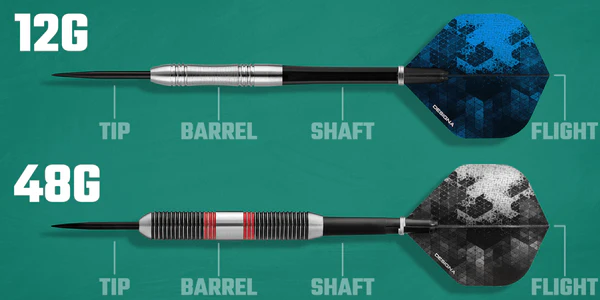
Choosing the right dart weights is crucial for every player, whether you are just starting out or already playing at an advanced level. Dart weight directly affects the way you throw, how stable your dart is in the air, and how accurately it lands on the board. If your dart weight does not match your playing style, even the best technique will not deliver consistent results.
For players using electronic or steel-tip boards, this choice becomes even more important. Understanding your ideal dart weight can help you control your shots better and reduce errors. If you are still deciding what type of board you want to play on, take a look at best electronic dart boards to match the right dart with the right board.

What Weight Darts Should You Choose
There is no one-size-fits-all answer when it comes to selecting dart weight. Each player is different. Some prefer lighter darts for speed and control, while others feel more confident with heavier darts that offer stability.
Your personal comfort, throwing motion, and even hand size can influence which dart weight works best for you. That’s why testing and adjusting is such a big part of finding your perfect darts. Beginners may want to start with something manageable and work their way up as their skills improve. If you are new to the game, best darts for beginners can help you decide where to begin.
Playing style is a major factor in picking dart weights. Everyone has a unique preference, and finding the right weight can make a noticeable difference in your scoring and consistency. In this article, we will explore dart weights, how to select the best one for your playing style, and what each weight category has to offer.
Key Takeaways
Choosing the right dart weights is essential for optimal performance
Dart weight selection depends on individual playing style
Understanding dart weights and their impact on gameplay is crucial
Different weight categories offer unique benefits
Playing style and dart weights are closely related
Dart weight selection is a critical aspect of the game
Understanding Dart Weights: The Basics
For beginners and experienced players alike, learning about dart weight ranges is an important step in improving your performance. The weight of a dart affects your throwing mechanics including speed, stability, and accuracy.
Most players select darts between 16 and 26 grams, as this range offers the best balance for control and flight. However, the ideal weight still depends on how you throw and what feels natural in your hand.
A heavier dart tends to be more stable in the air, which makes it easier to maintain a straight flight path. However, it usually travels slower and may require more effort to throw. A lighter dart, on the other hand, moves faster through the air, but can be more affected by slight hand movements or air resistance.
Here are some general tips for picking a dart weight:
Lighter darts (12–18 grams) are good for players who want speed and agility.
Medium-weight darts (19–22 grams) provide a balance between speed and stability.
Heavier darts (23–30 grams) are best for players who need extra control and stability.
By experimenting with multiple options, you can understand how different weights affect your throwing mechanics. This is one of the best ways to discover your ideal dart.
If you want to improve your board accuracy as well, reading how to aim with darts can greatly sharpen your results.
The Role of Playing Style in Weight Selection
In professional darts, a player’s personal playing style plays a major role in choosing the right dart weight. The correct weight can significantly improve comfort, confidence, and overall consistency.
A player’s playing style is shaped by several factors, such as:
Grip type
Stance
Throwing motion
Natural wrist movement
For example, a player who uses a smooth, relaxed release often feels more comfortable with a lighter dart. On the other hand, a player who throws harder and faster may prefer a heavier dart that stays more stable in flight.
When selecting a dart weight based on your playing style, consider the following:
Grip style: Players who grip the front of the dart often prefer lighter weights, while rear-grip players may lean toward heavier darts.
Throwing motion: Smooth and consistent releases work better with lighter darts, while forceful throws benefit from extra weight.
Stance: A more aggressive stance may favor a heavier dart, while a relaxed stance may feel better with a lighter one.
Experimenting is the key to finding the right match for your playing style. Testing different weights allows you to understand which one gives you the best control and comfort.
| Weight Range | Playing Style | Recommended Weight |
|---|---|---|
| Light (12–18g) | Smooth, consistent release | 14–16g |
| Medium (19–22g) | Balanced throwing motion | 20–21g |
| Heavy (23–30g) | Forceful throw | 24–26g |
For players looking to upgrade their setup as their style improves, exploring best professional dart boards can make a big difference in performance.
Different Weight Categories and Their Benefits
Choosing the right darts involves understanding the main weight categories. These categories are designed to suit different throwing techniques and comfort levels.
The weight of your dart affects your control, speed, and overall feel of each throw.
Light Darts (12–18 grams)
Light darts are best for fast throwers or players who enjoy an easy, effortless release. These are also ideal for beginners who are still developing muscle memory and proper form. They are easy to handle and reduce arm fatigue during long practice sessions.
Medium Darts (19–22 grams)
Medium-weight darts are the most commonly used. They provide an excellent balance between speed and stability. They are perfect for players who use a moderate throwing style and want consistent performance.
Heavy Darts (23–30 grams)
Heavy darts are designed for powerful throwers. They offer maximum stability and are less affected by air resistance. Many professional players prefer this weight range for competitive play because of its control and precision.
| Dart Weight | Benefits |
|---|---|
| Light (12–18g) | Fast release, beginner-friendly |
| Medium (19–22g) | Balanced speed and control |
| Heavy (23–30g) | Maximum stability, pro favorite |
What Weight Darts Should You Choose Based on Skill Level
Your skill level is another crucial factor when choosing dart weight.
Beginners
Beginners are usually better off starting with lighter darts. This helps reduce arm strain and allows you to focus on developing good technique. Around 16–18 grams is often ideal.
Intermediate Players
Once you gain confidence and consistency, medium-weight darts offer a perfect balance. This helps improve accuracy and control. At this level, you may also want to explore practicing advanced training through master dart throwing techniques.
Advanced / Professional Players
Experienced players typically choose heavier darts because they provide better precision and tighter groupings on the board. These players have already built the strength and technique needed to handle heavier weights comfortably.
Ultimately, your throwing style and comfort matter more than your skill label.
The Physics Behind Dart Weight and Flight
The physics of darts explains why weight matters so much.
Several forces affect how a dart travels:
Initial velocity (how fast it leaves your hand)
The angle of release
Air resistance and drag
Heavier darts create more momentum, which allows them to travel in a straighter line. Lighter darts are affected more by small changes in direction and air resistance.
Understanding this can help you make smarter choices. If your darts often bounce out, it could be more than just weight — in that case, stop darts bouncing out can help solve the issue.
How Grip Style Influences Weight Choice
Your grip style has a powerful impact on how a dart feels and performs in your hand.
Front Grip Considerations
Players who grip the dart near the front usually find lighter darts more comfortable. This reduces finger strain and allows a smooth, clean release.
Rear Grip Considerations
Players who hold the dart toward the back often prefer heavier darts. The added weight gives better balance and more control during the throw.
Center Grip Considerations
If you hold the dart in the middle, medium-weight darts tend to feel the most natural. They provide a balanced mix of control and comfort.
Finding the right combination of grip + weight is essential for consistent performance.


Testing Different Weights: A Practical Guide
The best way to find your perfect dart is through testing. Here is a simple and effective method:
Choose at least three different weights (e.g. 18g, 21g, 24g)
Throw each set for 30–50 throws
Pay attention to:
How comfortable it feels
Accuracy level
Dart grouping on the board
Eliminate the least effective option
Continue testing the remaining two
Also, take into account your barrel length and grip position when testing.
This practical approach ensures you don’t rely on guesswork but on actual performance.
Common Mistakes When Selecting Dart Weights
Many players make avoidable mistakes when choosing their darts:
Copying professional players without personal testing
Ignoring comfort and hand feel
Overlooking their own throwing style
Choosing based only on appearance
| Mistake | Effect on Performance |
|---|---|
| Copying professionals | Poor comfort and results |
| Ignoring comfort | Arm strain and fatigue |
| Wrong throwing style | Inconsistent accuracy |
Avoiding these mistakes will help you progress faster and enjoy the game more.
The Relationship Between Barrel Length and Weight
Barrel length and dart weight work together to influence balance.
A longer barrel may feel lighter and more controlled
A shorter barrel may feel heavier and faster
Even two darts of the same weight can feel completely different depending on barrel length and weight distribution.
The only true way to find the ideal setup is through trial and personal experience.
Conclusion: Making Your Final Weight Selection
Choosing the perfect dart weight is a personal journey. It requires understanding the basics, knowing the benefits of each weight range, and recognizing how your playing style and grip influence performance.
Your dart weight should match:
Your comfort level
Your throwing technique
Your skill level
Your long-term improvement goals
Be open to adjusting as you improve. The best dart is the one that feels like a natural extension of your hand.
As you continue to explore your darts journey, you might even want to experiment with environments such as best outdoor dartboard guide to test different conditions.
Once you find your ideal dart weight, you will notice:
✅ Better accuracy
✅ More confidence
✅ Greater consistency
✅ Improved enjoyment
And that is when real progress begins.
FAQ
What are the common weight ranges for darts?
Dart weights usually range from 12 to 50 grams, but most players use between 16 and 26 grams.
Why does the weight of a dart matter?
A heavier dart is more stable but slower, while a lighter dart is faster but less stable. Weight directly affects accuracy.
How does playing style impact dart selection?
Your grip, release, and strength determine what weight feels best. Testing different options is essential.
What are the benefits of different weights?
Light darts are fast and beginner-friendly, medium darts offer balance, and heavy darts provide maximum stability.
How does skill level affect dart choice?
Beginners usually prefer lighter darts, while professionals often use heavier darts for precision.
Does grip style matter?
Yes. Front grips prefer lighter darts, rear grips prefer heavier darts, and center grips work best with medium weights.
What mistakes should I avoid?
Avoid copying professionals blindly and ignoring your own comfort.
How does barrel length affect darts?
Barrel length changes balance and feel. A longer barrel may feel lighter, while a short barrel may feel heavier.