
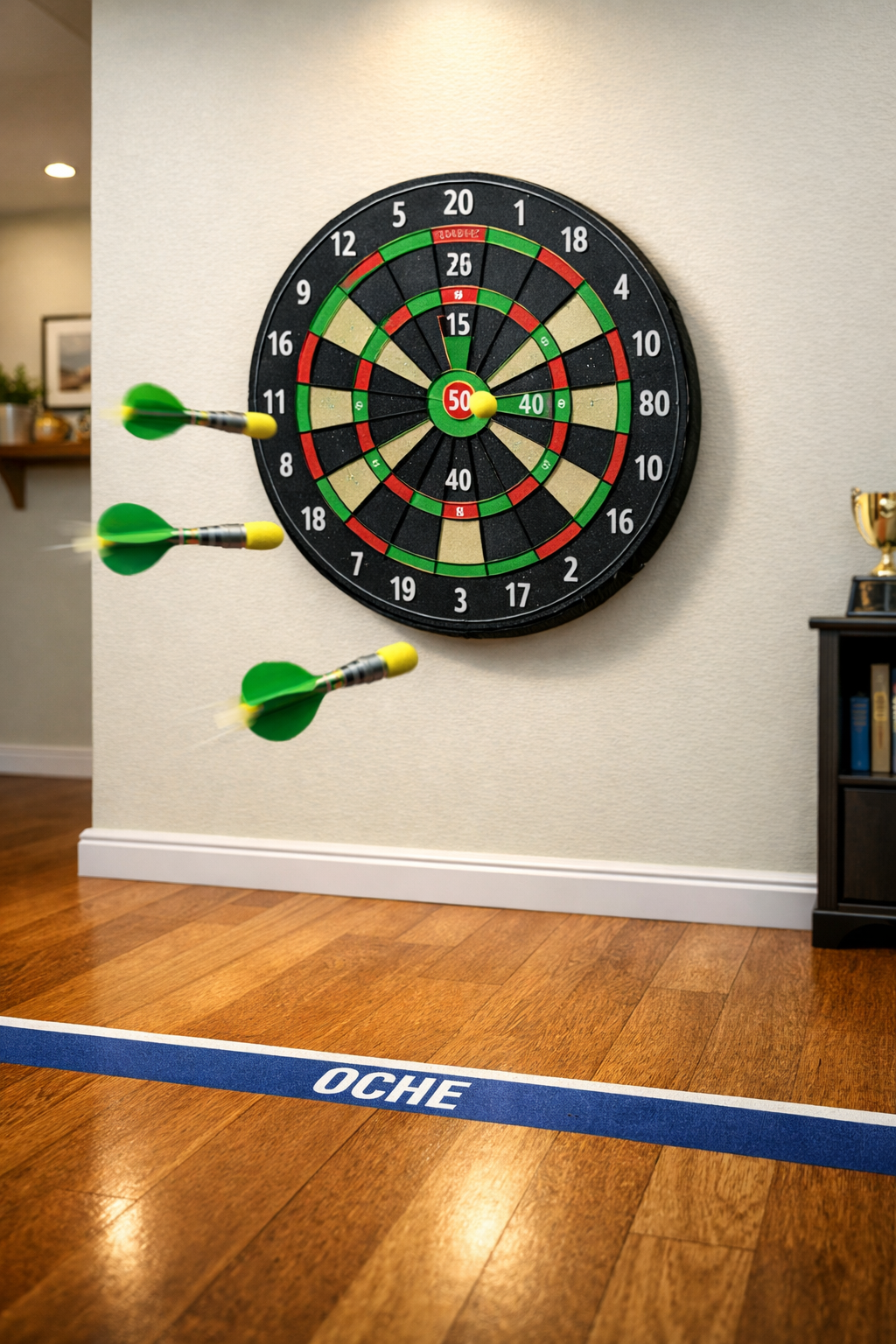
If your regular dart games are starting to feel predictable, tennis darts is a brilliant way to bring fresh energy to your setup. This unique game blends the familiar scoring style of tennis with classic dart-throwing skills, turning every round into a competitive and exciting experience.
Tennis darts is easy enough for beginners to learn quickly, yet challenging enough to keep experienced players hooked. It sharpens accuracy, improves focus, and encourages smart decision-making—perfect for casual home games or competitive dart nights.
If you’re still exploring fun formats, you may want to check out other popular options like dart games for beginners to expand your game collection.
Game Setup
A proper setup is the foundation of a great tennis darts match. When everything is positioned correctly, players can focus on throwing well instead of adjusting equipment mid-game.
Equipment Needed
To play tennis darts comfortably and safely, you’ll need:
A dartboard (electronic or bristle)
Soft tip or steel tip darts (depending on your board type)
A stable wall, cabinet, or dartboard stand
Tape or chalk for marking the throwing line
Adequate lighting around the board
Electronic dartboards are especially popular for tennis darts because they simplify scoring and reduce bounce-outs. Many players prefer starting with electronic dart boards that offer automatic scoring and multiple game modes.
Setting Up the Board
Mount the dartboard securely on a flat surface so it does not move during play. The bullseye must be 5 feet 8 inches (173 cm) from the floor, which is the official regulation height.
Before starting:
Make sure the board faces straight toward the throwing line
Remove obstacles around the playing area
Ensure good lighting to clearly see scoring zones
A stable board setup improves accuracy and prevents unnecessary frustration.
Marking the Court
Measure 7 feet 9¼ inches (237 cm) from the board and mark the throwing line, also known as the oche. This line determines where players must stand while throwing.
The floor should be flat and slip-free. Clear markings help maintain fairness and keep the game running smoothly, especially during competitive matches.
Basic Rules
Tennis darts follows simple rules inspired by real tennis scoring. This makes the game easy to understand while still adding tension and excitement.
Player Turns
Each player throws three darts per turn
Players must remain behind the oche
Turns alternate until the game or set ends
Players should retrieve darts only after all throws are completed.
Scoring System
Tennis darts uses tennis-style scoring such as:
Love (0)
15
30
40
Game
Players score points by landing darts in valid scoring areas. Winning a “game” works similarly to tennis—you must outscore your opponent and maintain a clear lead.
If you’re already familiar with countdown games, understanding 301 darts can help you compare scoring styles and improve overall strategy.
Winning Conditions
To win a match:
A player must win the agreed number of games
You must win by at least two points
This rule ensures close matches remain competitive and exciting until the end.
Stance and Grip
Strong fundamentals lead to consistent results. A good stance and proper grip can dramatically improve accuracy.
Finding Your Balance
Place your dominant foot slightly forward
Keep your shoulders relaxed
Bend your knees slightly for stability
Keep your head and upper body still
A balanced stance reduces unnecessary movement and helps you repeat accurate throws.
Holding the Dart
Hold the dart with your thumb and first two fingers
Keep the grip firm but relaxed
Avoid squeezing too tightly
For a deeper breakdown of grip styles and finger placement, see our full guide on how to hold a dart.
Credit: www.bbc.com
Throwing Technique
The throwing technique is key to playing tennis darts well. It helps you aim accurately and hit your target consistently. Focus on three main parts: pulling back, releasing the dart, and follow through. Each step builds on the last for a smooth throw.
Pulling Back
Start by holding the dart lightly between your fingers. Pull your arm back slowly, bending your elbow. Keep your hand palm-up and steady. Avoid jerky movements to keep control. This sets the path for the dart’s flight.
Releasing The Dart
Move your arm forward in a smooth, straight line. Let go of the dart gently at the right moment. Release too early or late and the dart will miss the target. Keep your wrist firm but relaxed to guide the dart’s direction.
Follow Through
After releasing, extend your arm fully toward the board. Your hand should point at the target. This helps keep your throw steady and accurate. Avoid stopping your arm abruptly to ensure consistent throws every time.
Scoring Tips
Scoring well in tennis darts requires focus and strategy. Knowing where to aim and how to keep track of points makes the game more fun. Good scoring habits help avoid mistakes and keep the game moving smoothly.
Target Areas
Aim for the doubles and triples to score more points quickly. The doubles line is the outer ring, and the triples line is the inner ring. Hitting these areas doubles or triples the number on the board.
The bullseye is also valuable. The outer bull scores 25 points, and the inner bull scores 50 points. Prioritize these spots to gain an advantage.
Avoiding Busts
A bust happens when you score more points than needed to reach zero. If this occurs, your score resets to what it was before your turn. To avoid busts, plan your shots carefully.
Always calculate your remaining score before throwing. Aim for numbers that help you reach zero exactly. Missing this can waste turns and cost you the game.
Tracking Scores
Keep a clear record of each player’s score after every turn. Use a scoreboard or a simple sheet of paper. Update the scores immediately to avoid confusion.
Make sure to subtract the points you scored from your total each turn. This helps you see how close you are to winning. Good score tracking keeps the game fair and fun.
Practice Drills
Practice drills are essential for improving your tennis darts skills. They help develop focus, control, and muscle memory. Regular drills make your throws more accurate and consistent. Below are some effective practice exercises to boost your game.
Aiming Exercises
Start by aiming at specific targets on the dartboard. Choose smaller sections and try to hit them repeatedly. Use a marker or tape to highlight these spots. This drill sharpens your focus and hand-eye coordination. Over time, you will notice better precision in your throws.
Consistency Building
Throw a set number of darts at the same target every session. Track your hits and misses carefully. The goal is to reduce variation and improve uniformity in your throws. Consistency drills train your muscles to repeat the same motion exactly. This helps in maintaining steady performance during matches.
Speed And Accuracy
Practice throwing darts at a steady pace without sacrificing accuracy. Set a timer and throw within short intervals. This drill builds quick decision-making and control under pressure. Speed combined with accuracy is key to winning tennis darts games. With practice, you will find the right balance between fast and precise throws.
Common Mistakes
Making mistakes is normal when learning tennis darts. Avoiding common errors helps improve your game fast. Focus on simple changes that bring better control and accuracy. Here are some frequent mistakes to watch out for.
Overgripping
Holding the dart too tightly causes tension. This limits smooth movement and reduces accuracy. Keep your grip relaxed but firm. Your fingers should hold the dart lightly to allow easy release.
Unsteady Stance
Standing without balance affects your throw direction. Find a steady stance with feet shoulder-width apart. Place your dominant foot slightly forward. Keep knees soft and upper body still to stay balanced.
Poor Follow Through
Stopping your arm right after release lowers precision. Follow through by extending your arm toward the target. This keeps the dart on a straight path. A smooth finish improves consistency over time.

Credit: www.atptour.com
Advanced Strategies
Advanced strategies in tennis darts elevate your play beyond basic rules and techniques. They focus on smart decisions, keen observation, and strong mental control. Using these strategies helps you score higher and outplay opponents.
Shot Selection
Choosing the right shot matters a lot. Aim for high-value zones to increase points quickly. Sometimes, targeting safer areas helps avoid risky misses. Adjust your shots based on your current score and game situation. Mix aggressive and cautious shots to keep opponents guessing.
Reading Opponents
Watch how your opponent throws and reacts. Notice their strengths and weaknesses in shot accuracy. Predict their next move by observing their patterns. Use this knowledge to block their chances or force mistakes. Staying alert to opponents’ strategies gives you a competitive edge.
Mental Focus
Keep your mind calm and focused throughout the game. Avoid distractions and negative thoughts. Concentrate on your stance, aim, and release with each throw. Confidence grows with steady mental control, improving your consistency. Practice breathing exercises to stay relaxed under pressure.
Playing With Others
Playing tennis darts with others adds excitement and challenge. It brings a social aspect to the game. You share the fun, compete, and learn from each other. Understanding how to play with others helps the game flow smoothly. It also makes the experience enjoyable for everyone involved.
Match Formats
Tennis darts can be played one-on-one or in teams. Singles matches have two players competing directly. Doubles involve two teams of two players each. Teams take turns throwing darts, alternating players. Matches can be played to a set number of points or games. Decide the format before starting to keep the game fair and clear.
Etiquette
Respect is key when playing with others. Wait for your turn to throw without rushing. Avoid distracting opponents during their throw. Congratulate good shots and keep a positive attitude. Handle disagreements calmly and politely. Following etiquette keeps the atmosphere friendly and fun for all players.
Keeping Score
Scoring in tennis darts is simple but important. Use a score sheet or a chalkboard to track points. Each player’s score updates after every turn. The goal is to reduce your score to zero first. Keep the scores visible to avoid confusion. Clear communication helps prevent mistakes and keeps the game moving.

Credit: www.youtube.com
Equipment Care
Proper care of your tennis darts equipment keeps it in top shape. Well-maintained gear improves your game and lasts longer. Small habits can prevent damage and wear.
Dart Maintenance
Check your darts regularly for bent tips or loose parts. Straighten bent tips carefully with pliers. Tighten the barrel and shaft to avoid wobbling during throws. Replace worn flights to maintain flight stability. Clean darts with a soft cloth to remove dirt and oils.
Board Care
Keep the dartboard clean and dry to prevent damage. Avoid hitting the board with excessive force to stop holes from enlarging. Rotate the board regularly to spread wear evenly across the surface. Use a protective cover when not playing to block dust and sunlight. Repair small holes with a dartboard repair kit if needed.
Storage Tips
Store darts in a protective case to prevent damage and loss. Keep the dartboard in a cool, dry place away from moisture. Avoid placing equipment near heat sources or direct sunlight. Organize your gear neatly to find everything easily. Proper storage extends the life of your tennis darts equipment.
Frequently Asked Questions
How To Play Darts Step By Step?
Stand balanced at the oche with your dominant foot forward. Grip the dart lightly. Pull the dart back, then smoothly throw it aiming at the board. Follow through by extending your arm. Each turn, throw three darts, subtract scores, and aim to reach zero exactly to win.
What Are The Basic Rules Of Darts?
Players throw three darts per turn, aiming at numbered board segments to score points. Doubles and trebles multiply scores. The goal is to reduce the score to exactly zero, finishing on a double or bullseye. Exceeding the score resets the turn’s points.
Do You Have To Leave The Oche To The Right?
No, you do not have to leave the oche to the right. Stand balanced and steady on the oche for a proper throw.
What Are The Basic Dartball Rules?
Dartball rules include throwing darts to score runs by hitting specific board segments. Each player throws three darts per turn. Teams alternate turns. Scoring mimics baseball, with strikes, balls, and runs. The game ends after nine innings, and the team with the most runs wins.
Conclusion
Playing tennis darts combines focus, skill, and fun. Stand balanced, grip your dart lightly, and aim carefully. Each turn lets you throw three darts to reduce your score. Keep your body steady and follow through with your throw. Practice helps improve your accuracy and confidence.
Enjoy the game with friends or family anytime. Tennis darts offers a simple way to challenge yourself and have fun. Give it a try and see your skills grow.