
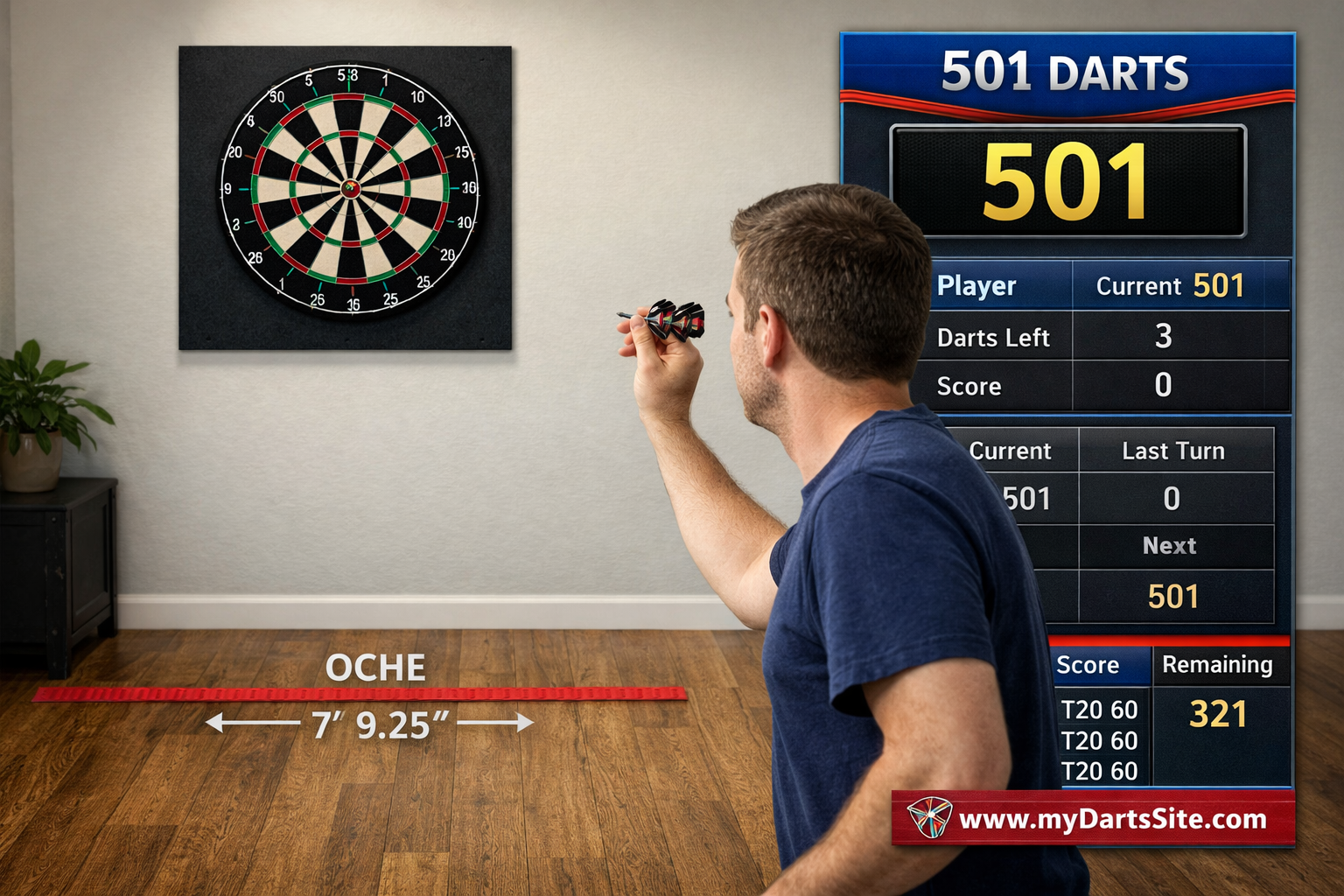
501 Darts is one of the most popular dart games worldwide, enjoyed by casual players, pub leagues, and professional players alike. While the game might seem simple at first glance, mastering it requires understanding the rules, developing proper techniques, and learning smart scoring strategies.
In this comprehensive guide, we will cover everything from basic rules, setup, stance, grip, and throwing techniques to scoring strategies, advanced tips, and practice routines. Whether you’re a beginner or a player looking to improve your precision, this guide will give you everything you need to dominate the oche.
If you want to enhance your performance, pairing your skills with quality equipment is essential. Check out our guides on professional dart boards and steel tip dart boards to maximize your gameplay.
Basic Rules of 501 Darts
Before you start throwing darts, you need a clear understanding of how 501 works. This is critical for strategy, scoring, and ultimately winning the game.
Starting Score
Every player begins with 501 points, which represents the total score you need to bring down to zero. Each dart you throw will reduce your score according to where it lands on the board.
Turn Structure
-
Each player takes three darts per turn.
-
After all three darts are thrown, the points scored are subtracted from your total.
-
Play continues alternating turns until one player reaches zero.
Scoring Points
-
Single areas: Value of the number hit
-
Outer ring (double): Twice the number value
-
Inner ring (treble): Three times the number value
-
Bullseye: Red center = 50 points, Green outer = 25 points
Winning the Game
To win 501 darts:
-
Reach exactly zero points
-
Your final dart must land in a double or the bullseye
-
If you reach zero without a double, your turn busts, and your score reverts
Bust Rule
A bust occurs when you:
-
Reduce your score below zero
-
Hit 1 as your remaining score
Your turn ends immediately, and your score reverts to what it was at the start of the turn.
For equipment to help your scoring consistency, see our recommendations for darts designed for beginners and advanced players.
Setting Up for Success
The right setup can dramatically improve accuracy and make practice more effective. Proper distance, board height, and dart selection form the foundation of a solid game.
Oche Position
-
The oche is the line behind which you throw darts.
-
It should be 7 feet 9.25 inches (2.37 meters) from the front of the dartboard.
-
Stand with your dominant foot slightly behind the line for balance.
Board Height and Distance
-
Mount the dartboard so that the bullseye is 5 feet 8 inches (1.73 meters) from the floor.
-
Distance from oche to board: 7 feet 9.25 inches.
-
Use a tape measure for precision to ensure fair play.
Learn more in our setup guide for optimizing your dartboard position and distance.
Choosing the Right Darts
Darts come in various weights, materials, and flight types:
-
18–26 grams: Standard weight range
-
Lighter darts: Easier to throw, less stable
-
Heavier darts: More control, requires more arm strength
Consider grip comfort, dart balance, and the flight shape. Testing multiple options helps you find your ideal darts for both steel tip and electronic dartboards.
Stance and Grip: The Foundation of Precision
Proper stance and grip are critical for accuracy and consistent throws.
Foot Placement
-
Dominant foot forward on the oche
-
Back foot slightly angled for stability
-
Keep weight evenly distributed, avoid leaning
Body Alignment
-
Face the dartboard directly
-
Align shoulders and hips with the target
-
Slight knee bend for balance and relaxation
Holding the Dart
-
Hold lightly between thumb, index, and middle fingers
-
Avoid gripping too tightly—this can cause tension
-
Maintain a relaxed wrist for smooth release
Good stance and grip reduce strain and improve precision. For tips on improving your posture, check out our stance guide.
Throwing Technique: Smooth, Controlled, and Accurate
Throwing correctly is more than flicking your wrist. Each element of your throw—from arm movement to follow-through—affects accuracy.
Arm Movement
-
Use your elbow as a pivot
-
Move forearm in a straight line toward your target
-
Avoid twisting your shoulder or wrist
Release and Follow-Through
-
Release when your arm points directly at your target
-
Keep your arm extended toward the board after release
-
Smooth follow-through builds muscle memory and consistency
Aiming Strategies
-
Focus on a small, specific target
-
Use your dominant eye for alignment
-
Adjust throws based on where previous darts land
Pair these techniques with high-quality dart flights to ensure your darts fly true and maintain stability during each throw.
Scoring Strategies for 501 Darts
Winning at 501 darts requires strategy, not just accuracy. Smart scoring decisions reduce your score quickly and set up easy finishes.
Targeting High Scores
-
Aim for treble 20 (60 points) to reduce your score efficiently
-
Alternatives: treble 19 or 18 for safer high scoring
Finishing with Doubles
-
Plan your throws so you end on a double or bullseye
-
Practice common doubles like double 16 or double 20
-
Knowing your preferred finishing double under pressure improves winning chances
Avoid busts by staying precise when your score is low. For optimal finishing routes, refer to our checkout chart for better game planning.
Practice Tips to Improve Quickly
Consistent practice builds muscle memory, improves aim, and sharpens mental focus.
Consistency Drills
-
Throw at the same target repeatedly
-
Track results and reduce variation
-
Build a reliable scoring rhythm
Improving Accuracy
-
Focus on small segments
-
Start slow to perfect form, then increase speed
-
Adjust grip and stance based on dart behavior
Mental Focus
-
Clear your mind before each throw
-
Visualize hitting your target
-
Stay calm under pressure
Pair your practice with the best dart boards to ensure durability and professional-grade performance during training.

Credit: www.youtube.com
Common Mistakes
Many players struggle with simple errors that reduce their score in 501 darts. Avoiding common mistakes can improve your accuracy and confidence. These mistakes often happen without notice but affect your game deeply.
Overgripping
Holding the dart too tightly causes tension in your hand. This tension makes your throw less smooth and less accurate. A light grip helps keep your wrist and fingers relaxed. Relaxed muscles allow for a natural, fluid release. Try to hold the dart gently but firmly enough so it does not slip.
Poor Stance
Your stance affects balance and aim. Standing too far or too close to the oche can throw off your alignment. Keep your dominant foot forward and knees slightly bent. Distribute your weight evenly for stability. Avoid leaning or twisting your body. A steady stance gives better control over your throw.
Rushed Throws
Throwing too fast reduces accuracy and consistency. Take your time to aim carefully before each throw. Rushed throws often miss the target or land off course. A smooth, controlled motion is better than speed. Breathe and focus on your target. Precision beats speed in 501 darts every time.
Advanced Techniques
Advanced techniques in 501 darts improve your precision and confidence. These skills help you play smarter, not just harder. Focus on shot selection, handling pressure, and exploring game variations. Each area sharpens your edge and makes playing more fun.
Shot Selection
Choosing the right target is vital. Aim for high-value areas early to reduce your score faster. When close to finishing, pick doubles or bullseye carefully. Avoid risky shots that could waste turns. Practice knowing which shots fit each score.
Pressure Handling
Pressure affects accuracy and focus. Stay calm by breathing deeply and keeping a steady stance. Visualize your throw before releasing the dart. Play slower when nervous to maintain control. Experience playing in front of others to build confidence.
Game Variations
Different 501 variations test skills in new ways. Try “Double In, Double Out” where you start and finish on doubles. “Round the Clock” focuses on hitting numbers in order. These variations improve strategy and help you adapt to new challenges.

Credit: a-zdarts.com
Frequently Asked Questions
How To Play 501 Darts Step By Step?
Stand balanced at the oche with your dominant foot forward. Hold the dart lightly. Aim and throw three darts per turn. Subtract scored points from 501. Finish by hitting exactly zero, ending on a double or bullseye. Keep your arm steady and practice regularly.
What Is The Best 501 Strategy?
The best 501 strategy focuses on scoring high with treble 20s and finishing on doubles efficiently. Prioritize consistency and practice checkout routes.
How To Play Dart Game Step By Step?
Stand balanced at the oche, grip the dart lightly. Pull back your arm, aim, and throw smoothly. Each player throws three darts per turn. Subtract scored points from your total. Reach exactly zero to win, usually finishing on a double or bullseye.
Practice for accuracy.
Do You Have To Leave The Oche To The Right?
No, you do not have to leave the oche to the right. Stand comfortably on the oche, facing the board straight.
Conclusion
Playing 501 darts is simple once you know the rules and techniques. Stand steady, hold the dart lightly, and aim carefully. Remember to subtract your scores correctly each turn. Practice often to improve your accuracy and consistency. Keep your body still and follow through with your throw.
Enjoy the challenge and have fun competing with friends. With patience and practice, your skills will grow. Now, grab your darts and give it a try!